
Big boom to truck industries
Big boom to truck industries
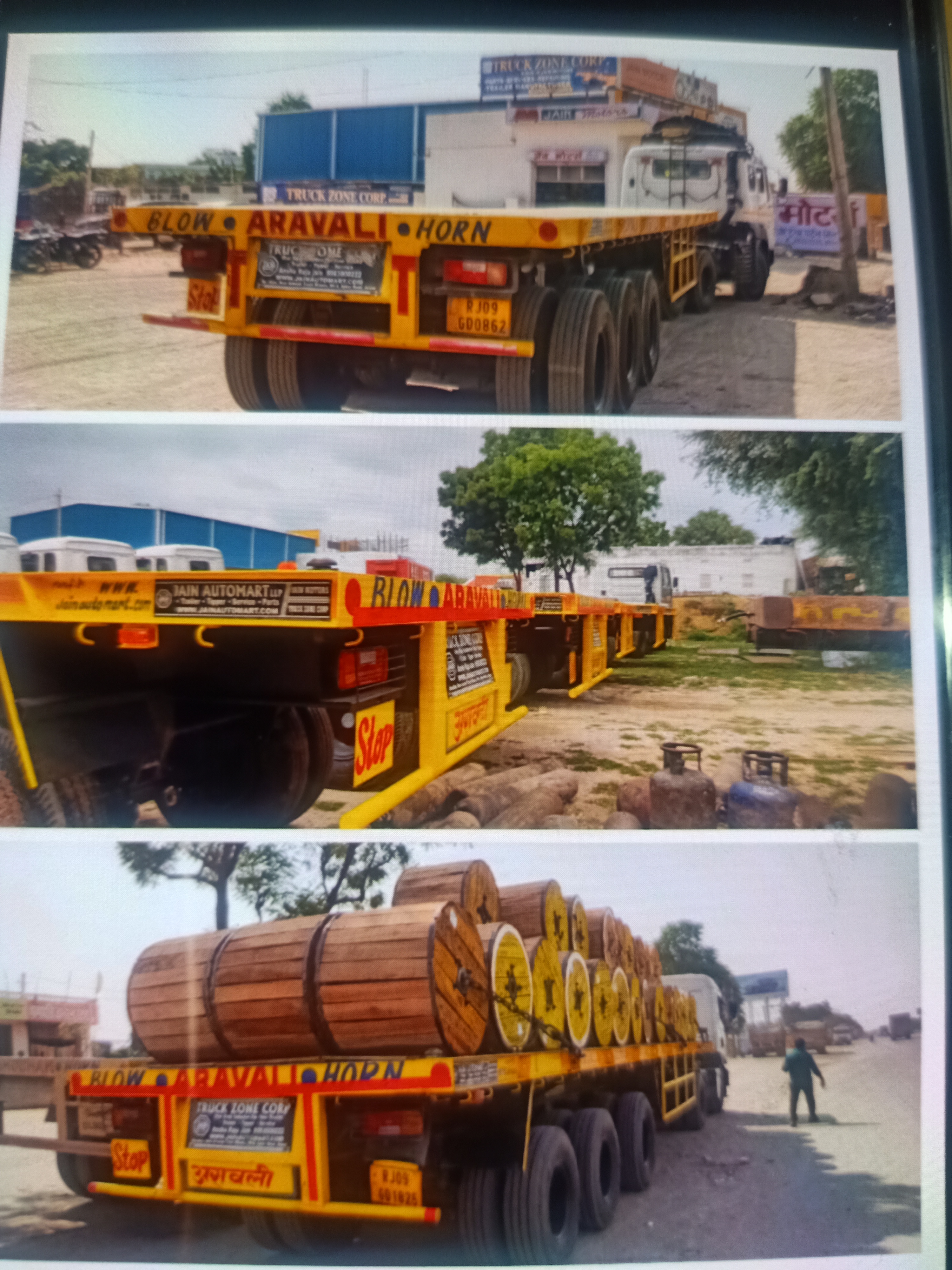
The vehicle scrappage policy, urban transport initiatives and record infrastructure spending announced in the Union budget 2021-22 are expected to boost demand for trucks and buses, benefiting commercial vehicle (CV) manufacturers like Tata Motors Ltd, Ashok Leyland Ltd and Volvo Eicher Commercial Vehicle Pvt. Ltd.
CV sales, which have been falling since the collapse of Infrastructure Leasing & Financial Services Ltd and revised load-carrying norms, were worsened by the covid-19 pandemic. Sales across categories declined by 28.7% to 7,17,688 units in FY20, while the same for medium and heavy commercial vehicles dropped by 42.4% to 2,24,806 units. In the April-December period last year, dispatches further declined by 37.2% to 3,58,203 units.
Finance minister Nirmala Sitharaman on Monday outlined a vehicle scrappage scheme for CVs older than 15 years and personal vehicles older than 20 years, which will be detailed by the roads ministry later. The Union government will also spend ₹18,000 crore to introduce 20,000 new buses in cities, in collaboration with private companies. The record allocation of ₹1.18 trillion for infrastructure projects will also spur the demand for commercial vehicles.
Scrapping of older vehicles will create demand for new vehicles and a proposed green tax on vehicles will add pressure on fleet owners to replace their old trucks.
Companies such as Mahindra and Mahindra Ltd and Suzuki Motor Corp. have already invested in facilities to recycle vehicles.
According to Vipin Sondhi, managing director and chief executive, Ashok Leyland, the budget has several positive signals for the manufacturing and commercial vehicles sector, which are key to the economy and there are four specific areas which provide an impetus to the sector.
“The commitment to augment our country’s road infrastructure with projects for building 8,500km of highways and economic corridors augurs well for surface and road transport. The ₹18,000-crore scheme to augment public transport in urban areas with the addition of 20,000 new buses in a PPP (public-private partnership) model would ensure cleaner and efficient public transportation and ease congestion,” Sondhi added.
Ceat Ltd, the flagship company of RPG Group on Wednesday announced Rs 1200 fresh investment into expansion of truck and bus radial capacity even as the second wave of pandemic has created a short term disruption.
The fresh investment approved by the board is over and above Rs 3500 crore investment announced by the company a few years ago. A part of this investment will go into expansion of the existing plant in Halol, Gujarat and the balance money will be used for setting up a brownfield facility in Chennai – company’s base for car radial tyres
Anant Goenka, MD of Ceat Tyres told ET, the company’s truck radial facility in Halol, on the outskirts of Baroda is expected to be utilised in a year’s time and then by then it would need a fresh capacity in 18 months – hence the company has taken the board approval.
Renewal of Fitness Certificates (FCs) of around 3,000 trucks in Tamil Nadu has been allegedly hit due to a row over reflective tapes.
All commercial vehicles including trucks should mandatory install reflective tapes on the front, rear and both the sides of the vehicle.
These tapes should adhere to Automotive Industry Standards (AIS) 089 and 090, according to Motor Vehicle Rules. It is also mandatory to get the installations certified and obtain ‘test’ and ‘conformity of production’ certificates.
Analysts at Ken Research in their latest publication “India Road Freight Market Outlook to 2024 – Driven by BS-VI Norms, revision in Existing Axle Norms by the Government and Technological Advancements” believe that the road freight market in India will revive back in 2021 with a faster growth rate.
The analysts reasoned it as due to government spending on roads, ports and inland coastal shipping to reduce congestion in metropolitan cities, increasing e-commerce sector, revised axle norms that have reduced freight cost and increased the capacity of trucks in India.
Future outlook & projections:
The trucking industry in India will be impacted by Covid-19 in the country and is expected to grow much faster. The truckers who have bought trucks with 50-100 percent institutional finance will see a tough time and need to maintain 90 percent capacity utilisation for upcoming EMIs, Insurance premiums & Permit with same freight cost despite high diesel cost. This is due to disturbed production-consumption cycle with only 30 percent of trucks operating with cut-throat competition for loads. Increasing Demand of e-commerce products, growing Reefer trucks, technical innovations such as E vehicles, Fleet Management Software and more are disrupting the competition space.
Trends among major players
The trucking industry in India is extremely fragmented in nature. The trucking industry is dominated by local domestic players who have a large number of fleets and providing competitive prices. Big companies such as Mahindra and All Cargo are moving towards the asset-light model, subcontracting with local transport vendors and provide Value added services such as kitting, assembling, packing and other which are very important in the road freight market. Online platforms such as Blackbuck, TruckOla, Rivigo and many more are disrupting the logistics space. The major players in the India road freight market include GATI, VRL logistics, TCI, Om Express, DGFC, Varuna and Express logistics.
Reasons for faster growth
The government under the budget of 2020-2021 has allocated Rs 170,000 crore for transportation which is 8 percent higher than the budgetary allocation of 2019-2020. The National Infrastructure Pipeline for 2019-2025 pegged the projected capital expenditure for Transportation (covering roads, railways, ports and airports) at about Rs 35.7 lakh crore. Various efforts include Bhratamala Pariyojana and the Sagarmala Project and Bangalore suburban transport project.
The demand for trucking in India is the highest during festive months (Sept, Oct, Nov, and Dec) and harvesting months (February to April) where the occupancy of trucks can rise by 30-40 percent along with freight fluctuations of 6-7 percent in comparison to normal freight rates prevailing in the trucking Industry.
The government is constantly changing the regulations associated with trucking industry such as restriction of trucks above the age of 15 years to phase out older & polluting vehicles from the country. GST has shifted all manual transactions to digital mode with e-way bills and Fastags ensuring more transparency into the system. The government has even revised Axle norms to increase load capacity that has impacted Small fleet operators negatively.
India exports a huge variety of fruits and vegetables which require cold chain services which are extensively being used nowadays in India. In spite of huge cold storage capacity, the country still lacks in cold transportation services with only 30k refrigerated containerized trucks available on road. In the past few years many food and meat processing companies such as Hibachi, Tendercuts, Zappfresh and more who require Cold transportation is being catered by many cold transporters such as GATI KWE, DHL Smart trucking, Snowman, Coldman logistics and more providing Integrated Logistics Solutions and positively impacting road freight market of the country.
Indian logistics market
India Logistics Sector has witnessed a robust CAGR with the highest share to freight forwarding market followed by warehousing, courier parcel and express market and VAS Market. Road freight is the dominant mode with transportation to domestic flow corridors and international neighbouring countries also. Many real estate developers such as Indospace, Logos India, ESR and many more are making constant investments in the warehousing market in Gurgaon, Chennai and Mumbai. E-commerce sector is becoming extremely popular with the introduction of online payments such as Amazon Pay, Paytm, Gpay and new popular delivery apps.
Indian road freight market
Small fleet owners dominated industry (70 percent of all fleet) operating at a margin of 8-12 percent and average transaction days of 12-15 per month. SFOs primarily operating on spot bookings while MFOs and LFOs working on LHAs. Indian road freight market has witnessed an average CAGR during 2014-19 due to revision in BF VI norms, scrappage policy, GST and new axle norms from the government with a rise in average highway construction of roads.
The developments of Bhratamala Pariyojana and the Sagarmala projects and the Eastern and Western Dedicated Freight Corridors, developments of ports along with Public-Private partnership Projects has stimulated the growth in the market. On the front of assessing seasonality fluctuations in demand, freight rates usually high during the festive season in September-December with WAFC being Rs 2.58/tonnes/km in 2019.
Indian road freight market segmentation
The road freight market is dominated by FTL by revenues and by volume. The average freight cost charged for LTL is higher than FTL due to additional risk in carrying multiple loads, higher insurance cost and more.
There are 12 million+ trucks in India, with net additions of over 6 lakh trucks in the market annually and there exist 40+ variants of trucks in the market. The country is dominated by light goods carrier vehicles in comparison to high goods carrier vehicles. The ratio of LCGV to HGCV is around 6:5. The LCGVs is expected to remain the dominant category in India trucking market.
Tata Motors has been working closely with truck drivers and transporters ever since the COVID-19 pandemic-induced lockdown started in India. The truck drivers were given monetary support as well as day-to-day rations for use. In between, the company also extended warranties and service support of eligible trucks as well. Tata Motors has now taken another step, one of giving financial aid to fleet owners. As said by the RBI, Tata Motors has extended the moratorium on EMI payment to all its corporate as well as retail customers. Tata Motors Finance, a subsidiary of the Tata Motors Group, has also brought in several schemes to help its customers. These include opex funding, loan restructuring, bill discounts, working capital, low EMIs for new vehicles and more. Such customised finance options, Tata Motors hopes, will allow the fleet operators to have essential cash flow and help them in their business.
If a customer opts for opex funding, Tata Motors will take care of fixed expenses for the next quarter. Suppliers as well as dealer claim financing will also be handled by Tata Motors. Given that income levels of many MSMEs have dropped in the last 3-4 months, a restructuring of their loans will be done. This will allow them to pay lower EMIs till the time their business as well as incomes go back to normal in the next six to nine months. As for working capital solutions for customers, a vehicle which is loan-free will be kept as collateral with TMF for funding. Payment cycle increase will also be taken care from an average of 45 days pre-COVID to 90 days going ahead.
Credit solutions will help customers get plying time support. If a customer were to buy a new truck, there will be lower EMIs. This will be prevalent only for the first 12 months. Based on requisite collateral, new vehicle loans will be bundled with working capital ones. Through this method, fleet owners can navigate through the first couple of months of business.
Hyundai Motor is shipping its first 10 Xcient Fuel Cell trucks, claimed to be the world’s first mass-produced fuel cell heavy-duty trucks, to fleets in Switzerland.
It plans to produce 50 trucks this year and 1,600 by 2025, powered by a 190-kW hydrogen fuel cell system capable of 400 kms per charge. Hyundai says it will eventually achieve a driving range of 1,000 kms per charge.
Commercial fleet managers in Switzerland will begin deploying the trucks in September.
“Xcient Fuel Cell is a present-day reality, not as a mere future drawing board project. By putting this groundbreaking vehicle on the road now, Hyundai marks a significant milestone in the history of commercial vehicles and the development of hydrogen society,” said In Cheol Lee, executive vice-president and head of the commercial vehicle division at Hyundai Motor. “Building a comprehensive hydrogen ecosystem, where critical transportation needs are met by vehicles like Xcient Fuel Cell, will lead to a paradigm shift that removes automobile emissions from the environmental equation.”
The trucks will house seven hydrogen tanks with a combined storage capacity of about 32 kgs. Hyundai showed the truck in North America for the first time at the 2019 North American Commercial Vehicle Show.